





Quick answer: You can lower direct mail marketing costs by matching quantity to the right production method, printing in volume when it makes sense, tightening your list, choosing the correct postage class, and consolidating print and mailing with one partner. The biggest savings usually come from unit-cost drops on bulk printing, fewer undeliverable pieces, and smarter personalization—not from cutting paper quality alone.
Direct mail still drives measurable response for retail, real estate, healthcare, nonprofits, and B2B teams. Postage and production, however, add up quickly when campaigns are planned piece by piece. This guide shows how marketers reduce cost per piece and cost per lead while keeping mailers professional, on-brand, and compliant.
What actually drives direct mail marketing costs?
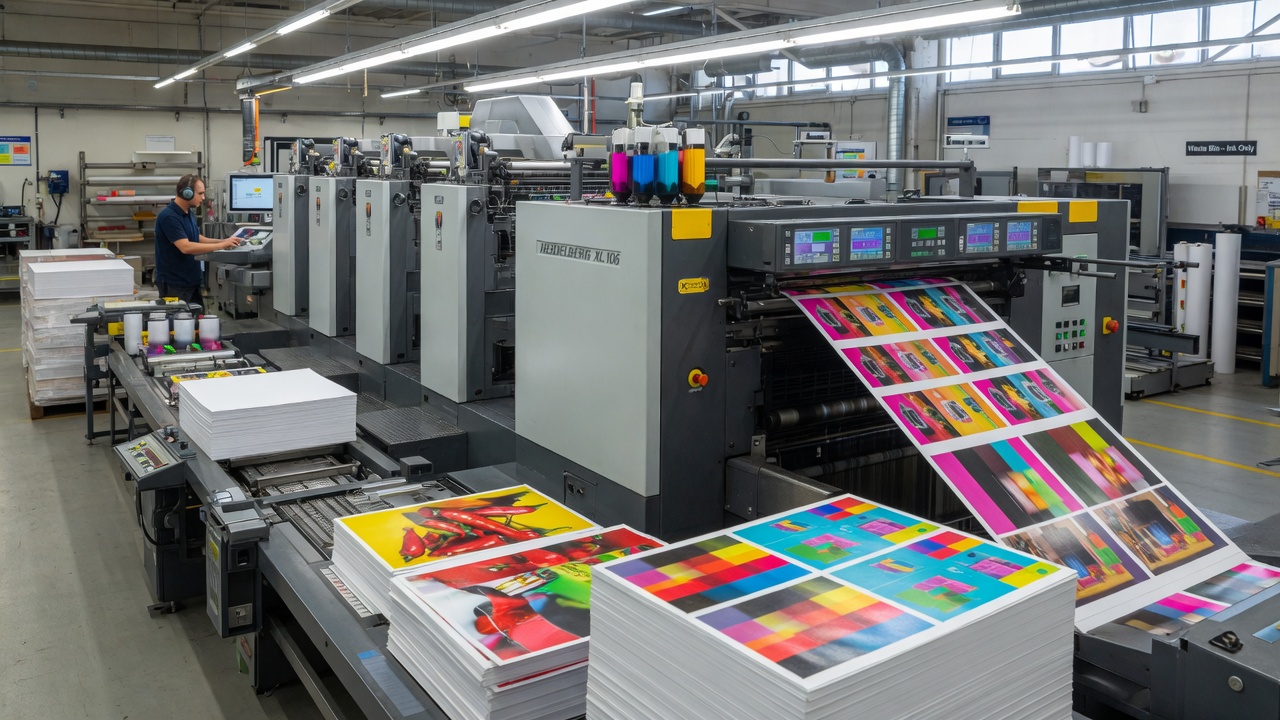
Most budgets break into four buckets. Understanding each one helps you decide where to save money without hurting response rates.
- Creative and prepress: design, copy, proofing, and print-ready file preparation
- Printing and finishing: press method, stock, coating, folds, and binding
- Data and addressing: list purchase or extraction, cleaning, variable data, and barcoding
- Postage and delivery: USPS class, sortation, drop timing, and undeliverable waste
Many teams only compare printer quotes. In practice, postage often exceeds ink and paper. That is why a slightly higher print price can still lower total campaign cost if it includes better list hygiene, automation-compatible design, or smarter mail classes.
How bulk printing lowers cost per piece
Unit cost falls as quantity rises because setup, plates (for offset), makeready waste, and press time are spread across more pieces. That is the core economic advantage of bulk printing for postcards, self-mailers, catalogs, and letter packages.
A full-service commercial printer can also recommend whether digital or offset is cheaper at your quantity. Digital usually wins for short runs, versions, and variable data. Offset usually wins when you need thousands of identical pieces with consistent color. If you are comparing methods for marketing materials, pair this guide with practical campaign ideas in our related article on proven direct mail marketing strategies that convert.
For production capability that spans both methods under one roof, explore bulk printing options that support high-volume mailers and short-run tests without forcing you into a single press type.
Quantity breakpoints: when volume starts paying off
There is no universal “magic number,” but estimators commonly see a shift as quantities move from hundreds into the low thousands:
- Under ~500–1,000: digital is often simplest and most economical, especially with multiple versions
- Mid-range (roughly 1,000–5,000): quote both digital and offset; finishing and stock matter as much as press type
- 5,000+: offset frequently delivers the best unit economics on stable designs
- Repeated campaigns: reuse templates, plateable designs, and approved brand files to cut prepress cost every cycle
Ask your printer for side-by-side estimates at two or three quantities. Seeing 2,500 vs. 5,000 vs. 10,000 side by side clarifies whether combining drops or expanding the list improves ROI.
Choose formats that protect response and budget
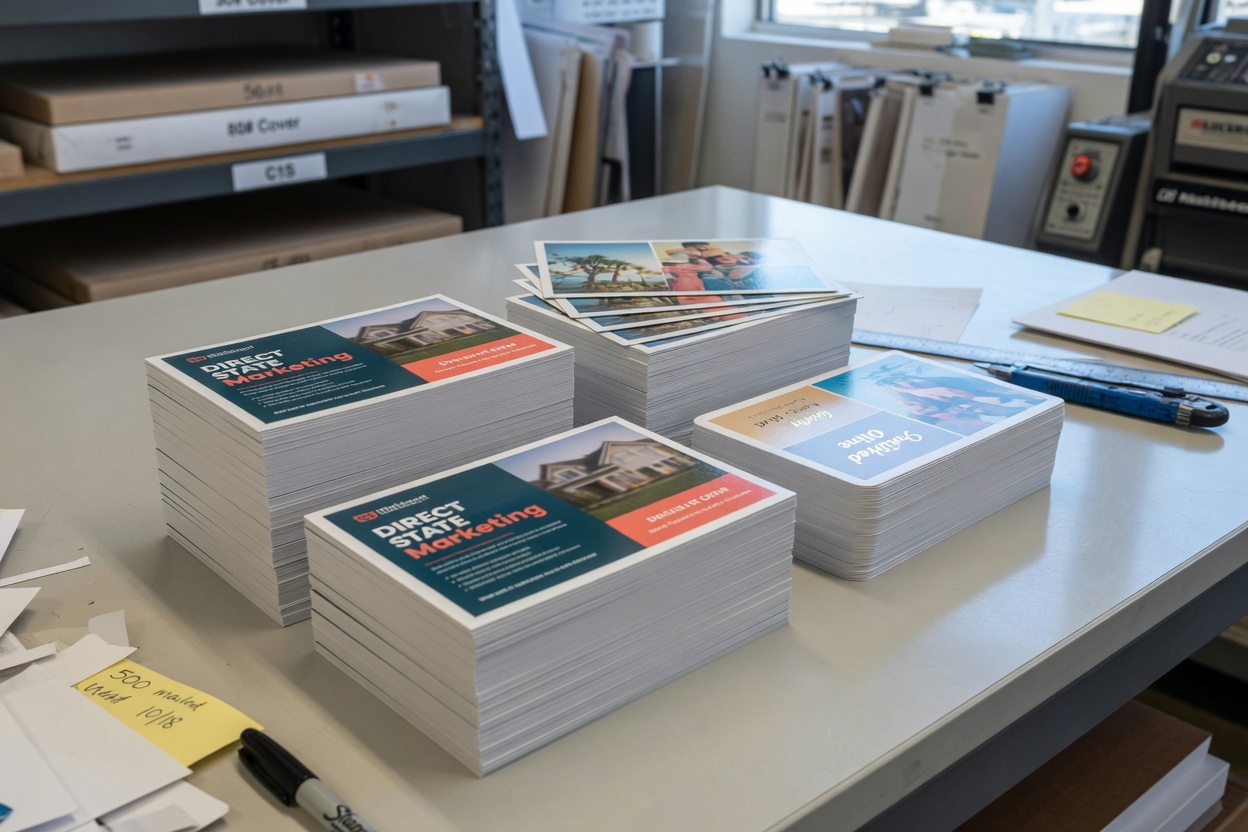
Format choice affects postage, print waste, and response. Popular cost-efficient options include:
- Postcards (4×6, 5×7, 6×9, 6×11): no envelope, fast production, strong for offers and local services
- Self-mailers: more room for storytelling without full letter-package costs
- Letter packages: higher trust for financial, healthcare, and nonprofit appeals—but higher postage and assembly cost
- Catalogs and booklets: higher print cost, but strong for multi-product sellers when paired with bulk runs
If brand visibility also depends on outdoor or event graphics, coordinate mail with display work through a local commercial shop. A broader overview of regional production options is covered in Printing in Orange County: Your Comprehensive Guide.
Offset vs digital for direct mail printing
ZeroRank and competitive AI citations for Orange County printers consistently surface educational content about digital vs. offset—because buyers need this decision before budgeting. Use these practical rules:
- Digital printing: best for tests, multi-version campaigns, variable data direct mail, QR codes unique to each recipient, and tight turnarounds
- Offset printing: best for long runs, stable color across thousands of pieces, catalogs, and high-volume postcards where setup cost is amortized
- Hybrid workflows: print shells offset, then overprint personalized offers digitally when you need volume plus personalization
Do not force offset for a 750-piece test or digital for a 50,000-piece national drop. Align method to quantity, version count, and deadline.
Postage strategy: where many campaigns overspend
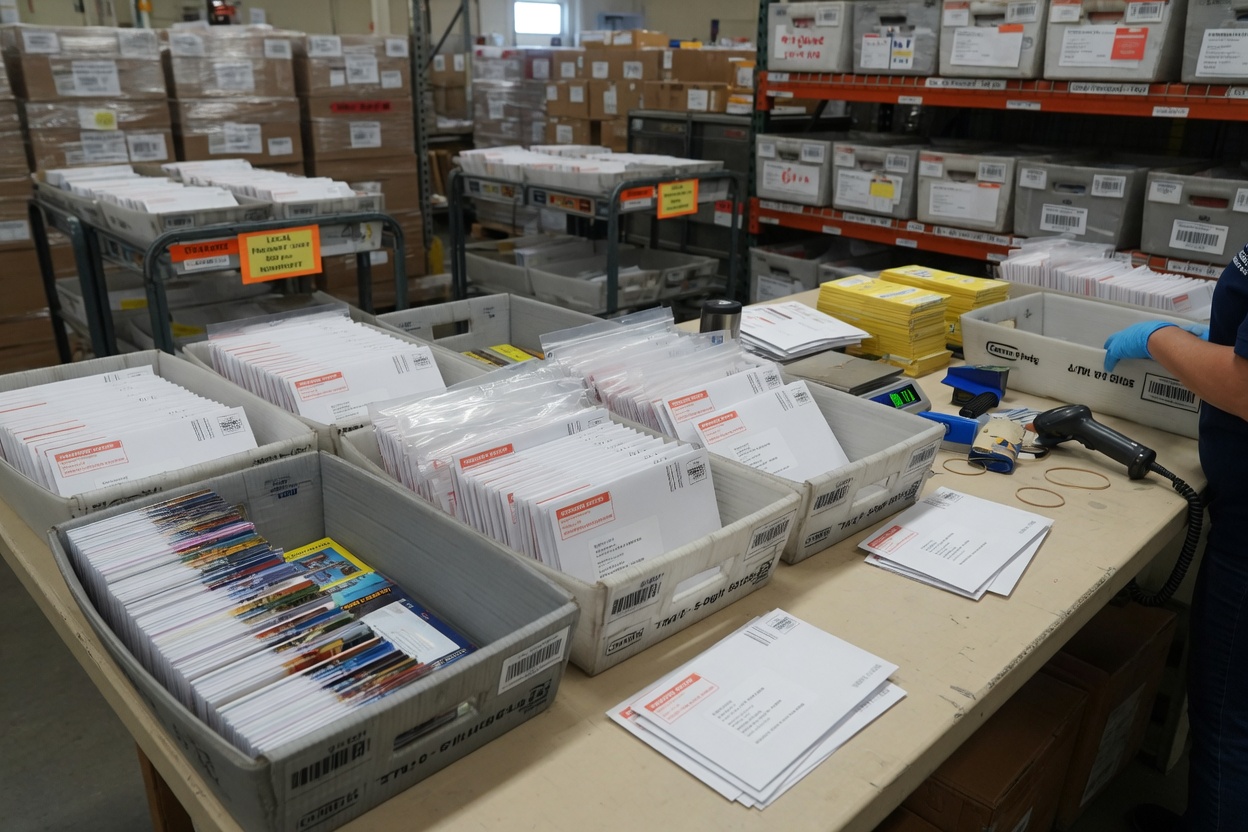
Postage is often the largest line item in print mail marketing. Cost control starts before artwork is final.
1. Clean the list before you print
Every undeliverable piece wastes print and postage. Use NCOA (National Change of Address), CASS certification, and duplicate suppression. Removing 5–10% bad records can save more than switching paper grades.
2. Design for automation and preferred rates
Aspect ratio, thickness, gloss, and address-block placement affect whether a piece qualifies for automation discounts. Have your mail house review the layout early—not after plates are made.
3. Match mail class to campaign goals
- First-Class: faster and more reliable delivery; higher cost; useful for time-sensitive or high-value offers
- Marketing Mail (Standard): lower postage for promotional campaigns with flexible delivery windows
- EDDM (Every Door Direct Mail): route-based coverage without a named list; efficient for local retailers and events
Cheapest postage is not always best ROI. If delayed delivery kills a sale window, First-Class can produce a lower cost per conversion.
Variable data: spend a little more per piece to waste less overall
GSC demand around variable data direct mail, direct mail campaign printing, and personalization shows that marketers want relevance, not just volume. Personalization can raise print cost slightly while lowering cost per response through better targeting.
High-impact, cost-aware uses include:
- Name, store location, or sales rep on the front
- Offer codes unique to each segment
- Maps or QR codes that route to the closest location
- Industry- or lifecycle-specific copy blocks
Start with 2–4 segments rather than fully unique artwork for every recipient. That balances relevance with bulk production efficiency.
Seven practical ways to reduce direct mail marketing costs
- Consolidate vendors. One partner for print, addressing, and drop reduces freight, handoffs, and schedule risk.
- Standardize sizes. Reusing approved postcard or self-mailer sizes cuts redesign and die-related costs.
- Plan annual volume. Share a 6–12 month forecast so your printer can recommend stock buys and better unit pricing.
- Test before scaling. Prove creative with a digital run, then move winners to bulk offset.
- Simplify finishes. Soft-touch, foil, and specialty coatings add impact—use them on flagship drops, not every weekly flyer.
- Right-size the paper. Heavier stock feels premium but can push postage into a higher category. Confirm weight with the mail house.
- Align drop dates. Combining segments into one mail drop can improve sortation discounts and reduce setup fees.
Build a quote that compares total cost—not print alone
When you request estimates for direct mail printing and mailing services, send identical specifications to every vendor:
- Format, flat size, finished size, and quantity (plus alternate quantities)
- Paper, ink, coating, and sides printed
- Number of versions or variable fields
- List status (house list, purchased, EDDM routes)
- Mail class and required in-home dates
- Whether addressing, sorting, and USPS induction are included
- Delivery or pickup location
Then calculate total cost per piece and, after the campaign, cost per lead / cost per sale. A lower print line that creates higher postage or lower response is not a savings.
When bulk printing is—and is not—the right move
Bulk printing is ideal when:
- Your offer and creative are already validated
- You can mail 2,500+ similar pieces (or will reuse the shell)
- Brand color consistency matters across a large drop
- You can warehouse or mail promptly after production
Stay flexible with smaller digital runs when:
- You are testing new creative or pricing
- Each location needs different offers
- Inventory risk is high (seasonal products, short promotions)
- Turnaround is measured in hours, not days
FAQ: direct mail costs and bulk production
What is the cheapest way to run a direct mail campaign?
For many local businesses, a well-targeted postcard mailed as Marketing Mail or EDDM is the lowest total cost format. Clean data and a clear offer matter more than ultra-cheap paper.
Does bulk printing always mean offset?
No. “Bulk” refers to quantity and unit economics. High-speed digital presses can be cost-effective at mid-run quantities, especially with variable data. Offset typically leads at true high volume.
How does list quality affect cost?
Poor lists inflate postage and suppress response. Investing in data hygiene usually lowers cost per conversion even if the print budget stays flat.
Should I print and mail with the same company?
Often yes. Integrated print-and-mail workflows reduce shipping between vendors, protect drop dates, and make accountability clearer when something goes wrong.
What files should I send for direct mail campaign printing?
Provide print-ready PDFs with bleed, embedded fonts, and correct color mode, plus a clean data file (CSV) mapped to variable fields. Confirm barcode and address-clear-zone requirements before final export.
Work with a full-service print and mail partner
Lowering direct mail marketing costs is a systems problem: production method, format, data, postage, and schedule must work together. A commercial printer that can advise on bulk printing, variable data, and mailing under one project plan helps you protect both budget and brand quality.
Main Graphics is an Irvine, California commercial printer (established 1988) with digital and offset production, finishing, and marketing support for businesses across Orange County and Southern California. For capabilities that support high-volume mailers and short-run tests, review bulk printing on offset and digital presses, then request a quote with quantity tiers so you can see true unit-cost breakpoints.
Ready to plan your next drop? Visit Main Graphics for high quality printing at 15321 Barranca Parkway, Irvine, CA 92618, or call (949) 788-6100 (Monday–Friday, 8:00 a.m.–5:00 p.m.).
If you also need event graphics to support a mailed invitation or promotion, see how large-format pieces extend campaigns in our guide to large format printing in Orange County.
Bottom line
To cut direct mail marketing costs without sacrificing results: print in volume when creative is proven, choose the right press method, design for postage automation, clean your list, personalize with purpose, and measure total cost per conversion. Bulk printing is the production lever—smart mailing is the campaign lever. Use both together.